Posts Tagged ‘negotiation’

Sales Negotiators Know Not To Give In First

Tuesday, June 16th, 2009
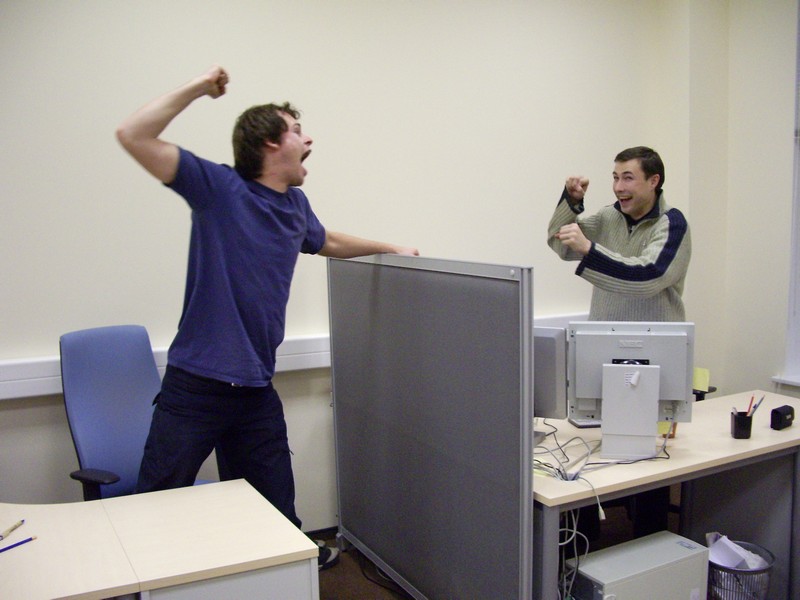
Sales Negotiators Who Make The Wrong Concessions End Up Playing Defense

Sales Negotiators Who Make The Wrong Concessions End Up Playing Defense

I wish that there was some sort of black magic potion or single scientific study that I could point to in order to justify what I’m about to tell you, but there isn’t. So here it goes: never be the first to make a concession on a MAJOR issue.

Why Should We Take The Hard Line Here?

Concessions are a part of every sales negotiation. In fact we’ve spent a lot of time talking about the 5 ways that sales negotiators can use concessions to get what they want.  Now all of  a sudden it looks like we’re doing a 180 and telling you to not give in. What’s up with that?

The big difference here is that we’re focusing on the MAJOR issues – not the 100′s of other, smaller issues that come up during any sales negotiation. It’s on these issues and these issues alone that you need to take the hard line.

It’s All About The Experiments

This is one of those things that has been the subject of a lot of  on-the-job experimentation. What each of the studies has shown is that the side of the table that makes the first concession on an important issue always seems to end up doing poorly. The reasons are not completely clear, but it appears as though the side of the table that made the concession then finds themselves on the defensive during the rest of the negotiation.

How Can You Use This Information?

Knowing that giving in first on major issues is a bad idea, you need to adjust your negotiating strategy so that you don’t deadlock over these issues. This means that BEFORE you allow the sales negotiation to get to a major issue, make sure that you discuss several smaller issues. On these issues, make the first concession if it is appropriate. This will buy you good will with the other side that you’ll be able to play on when you reach a major issue.

Final Thoughts

When you stand firm on the major issues you’ll be sending a message to other side that perhaps their expectations are too high and they should start to expect to lower them. Since you won’t be giving in first, you won’t have to be on the defensive for the rest of the sales negotiations and you’ll be all set to close better deals and close them quicker.

Questions For You

Have you ever been in a sales negotiation where you ended up being the first to make a concession on a major issue? How did that sales negotiation turn out? Has the other side ever been the first to make a concession on a major issue? How did that make you feel when they did that? Leave me a comment and let me know what you are thinking.

Click here to get automatic updates when
         The Accidental Negotiator Blog is updated.

What We’ll Be Talking About Next Time

Every sales negotiation has some sort of time limit associated with it. You might have an hour, a day, or even longer to conduct the negotiations, but there is some point in time at which you’ll run out of time to talk. This is when most sales negotiations fall apart…

3 Things Every Sales Negotiator Needs To Know

Tuesday, June 9th, 2009
Sales Negotiators Need To Learn How To Slow Things Down

Sales Negotiators Need To Learn How To Slow Things Down

Wouldn’t it be great if the best sales negotiators in the world could drop by our place and sit down with us for awhile to share what they’ve learned? If you knew that they were coming, what questions would you ask them?

We’ve already talked about some of the things that master sales negotiators could teach us, and we’ve covered some of the secrets that they use to walk away with the results that they wanted.

However, let’s dive deeper – if we only had a few minutes to talk with a master sales negotiator, what would they want to share with us?

Buyers Need To Move Slower Than Sellers

Our sales negotiations are more often than not a game of back-and-forth: offers are followed by counteroffers which are then themselves countered. One thing that too many of us overlook is that the buyer’s first counter offer is one of the most important events in a sales negotiation.

Before the buyer makes a counteroffer, the buyer has no idea if there is any chance of striking a deal. The more the buyer goes on talking and doesn’t make a counteroffer, the greater the doubt in the seller will be. In fact, he/she may end up lowering their price just to get the buyer to make a counteroffer in the first place.

Learn To Say “Yes” Slooooowly

Sometimes, no matter what side of the table you are on, you’ll be presented with  a deal that is perfect just the way it stands. The price is right, the terms are good, and it meets your schedule. You are busy and have lots of other things to do – you want to say “yes” and move on to other things.

However, the master sales negotiators would caution you against doing this. It’s not that there is anything wrong with the deal, it’s just that you are going to leave the other side with a bad feeling about the negotiation. They are forever going to be filled with doubts about the deal (and they may do a poor job of keeping their part of the deal). However, if you say “no” a few times or at least take you time saying “yes”, then they will feel as though they “earned” the final outcome and this will, surprisingly, leave them feeling more satisfied.

Breakdowns – Good For Buyers, Bad For Sellers

Most of the time, the deal that we’re negotiating can be quite complex. In these cases it’s natural for the buyer to request a breakdown of the prices involved. This is an excellent way to get some insight into the seller’s costs.

On the other hand, providing such information is going to allow a buyer to do a better job of negotiating a lower price so sellers should work hard to not have to provide them. This can be impossible if they ask for it at point blank; however, trying to avoid ever getting into that situation is always a good plan.

Final Thoughts

As we’ve said before, the art of good sales negotiating does not rely on one single skill. Rather there are literally 1,000s of small details that if you can get them right, then you’ll turn into a force to be reckoned with during any sales negotiation. The three skills that we’ve discussed here will get you on your way to becoming a sales negotiating pro and will allow you to close better deals and close them quicker.

Questions For You

When you are buying something, do you ever have the strength to hold off on giving a quick counteroffer in order to strengthen your position? Have you ever been working on a deal when the other side presented you with the perfect offer? What did you do? Have you ever been able to avoid giving a cost breakdown after you had been asked for one? Leave me a comment and let me know what you are thinking.

Click here to get automatic updates when
         The Accidental Negotiator Blog is updated.

What We’ll Be Talking About Next Time

I wish that there was some sort of black magic potion or single scientific study that I could point to in order to justify what I’m about to tell you, but there isn’t. So here it goes: never be the first to make a concession on a MAJOR issue…

3 Secrets Successful Sales Negotiators Use To Win

Tuesday, June 2nd, 2009
3 Secrets That Top Sales Negotiators Know

3 Secrets That Top Sales Negotiators Know

Ok, so I’ll be the first to admit it – I used the forbidden word “win” in the title. In sales negotiations we prefer to not say “win” because it implies that there is also a “loser”. and that’s not a good thing. How about if we try something like “3 secrets to always walking away feeling successful“?

It’s All About Patterns

Successful sales negotiators are good at what they do because they know what they are doing. That being said, they also have developed patterns for conducting sales negotiations that serve them well. If you want to improve how your sales negotiations turn out, then taking the time to study these patterns will help move you towards your goal.

The 3 Secrets

  1. Control Your Location & Time: Just like most sports teams, the sales negotiator who conducts a negotiation on his / her home turf tends to do better. Negotiating at your base of operations makes life easier – you have better access to information and people and you spend less time searching for things that you need to complete the deal. Additionally, although there is no one perfect time to conduct sales negotiations, every deal has its own best time. Late on Fridays can often be a powerful time to close a deal quickly!
  2. Understand Your B.A.T.A.N.A?: Before you start any sales negotiation, you need to make sure that you have a good understanding of what your Best Alternative To A Negotiated Agreement (BATANA) is. If the talks break down, what will your next action be? Knowing this in advance gives you more power while you are negotiating.
  3. Start High, Give In Slowly: If you are negotiating to sell something, you need to plan the negotiation in advance. This means setting your price high enough so that you have room to allow the other side to “bring you down”. During every negotiation, you will have to make  concessions to the other side. Studies have shown that sales negotiators who make their concessions in smaller increments seem to end up doing better.

Next Steps

The art of sales negotiations does not have one magic “sliver bullet” that suddenly transforms an average sales negotiator into a top-notch sales negotiator. Instead, there are a 1,000 negotiating skills that provide the scaffolding that we all need in order to climb to the next level negotiating. Get this right and you’ll be well on your way to being able to close better deals and close them quicker.
Click here to get automatic updates when
The Accidental Negotiator Blog is updated.

Questions For You

Have you ever had to conduct a sales negotiation in a location that was less than ideal for you? How did that deal turn out? What was the best time that you ever conducted a sales negotiation? What was the worst? Leave me a comment and let me know what you are thinking.

What We’ll Be Talking About Next Time

Wouldn’t it be great if the best sales negotiators in the world could drop by our place and sit down with us for awhile to share what they’ve learned? If you knew that they were coming, what questions would you ask them?

Can Sales Negotiation Be Done Via Email and Text?

Tuesday, May 26th, 2009
Email Is A Powerful Tool, But Is It The Right Tool For Sales Negotiations?

Email Is A Powerful Tool, But Is It The Right Tool For Sales Negotiations?

I might be setting off a bit of a firestorm with this idea, but here in the 21st Century do you think that it is possible to conduct sales negotiations using more smart phones and less human contact?

The Need For Modern Solutions

The #1 attraction of using a smart phone (Blackberry, iPhone, or whatever) in the first place is that it can speed just about anything up. The immediacy of e-communications allows deals to develop quicker and to move at speeds that once were unimaginable. However, when it comes to sales negotiations, things can get a bit trickier.

What we are all just starting to deal with here are the questions that come up surrounding e-mail negotiations. Some of these questions include:

  • Is it possible to conduct sales negotiations completely via email?
  • What impact does this have on what kinds of information can be shared during the sales negotiation?
  • When is human contact called for?

The New Rules

Using email as a central part of any sales negotiation changes a number of things. The first is that anything that you put into an email will live forever and may come back to haunt you. It is a great way to send information to the other side, keep almost perfect records, and make sure that everyone involved is informed on where things stand.

At the same time there are pitfalls that everyone must be aware of. These tend to show up whenever there are conflicts or misunderstands. The problems come about because the one thing that email does not do well is communicate emotions or nuances.

So what are the “new rules” in this world of email supported sales negotiations? Here are a few of them:

  1. Slow Down: do not write and send emails on the fly. Remember, these things live forever. I prefer to write the email one day, save it, re-read it the next day and then send it. I’m always careful to leave the “To:” field blank while I’m composing an email JUST IN CASE the “send” key get pressed too early.
  2. Only You Can Prevent Forest Fires: in order to prevent those cases where misunderstandings start small but keep getting blown out of proportion, don’t use ALL CAPITAL LETTERS, multiple !!!!!, or including flip comments (“How about making a real counteroffer?”).
  3. Don’t Forget The Phone: In every sales negotiation, there will probably be a time in which it would be better if you picked up the phone and talked with the other side instead of sending them another email. Realize that this moment exists, look for it, and act when it shows up.

Lessons Learned

The take-away from all of this is that times are changing. Gone are the days that all sales negotiations could take place face to face. Negotiating via email is here to stay and we all need to get used to the new rules of the game.

The experts who have been living with this new way of doing business have one final suggestion for all of us. They recommend that prior to starting the negotiating process, all parties meet in person. This is the key to allowing everyone to understand their body language and how they react to things. In the end, this is critical so that you can understand the true intent behind the words in their emails.

Do you negotiate via email today? Has there ever been a miscommunication caused by email? What caused the problem? How was it resolved? Leave me a comment and let me know what you are thinking.

The Difference Between Sports And Sales Negotiation: Winning

Tuesday, May 19th, 2009
Winning Means Everything In Sports, In Sales Negotiations It Means Something Else...

Winning Means Everything In Sports, In Sales Negotiations It Means Something Else...

What does it mean to “win” a sales negotiation? This sure looks like a simple question doesn’t it? I think that in our minds, we all know what we think winning looks like – after all, we see it in sports all the time. However, things are just a bit different when it comes to sales negotiations…

In sports, winning sometimes is achieved by a blowout - the football game that ends up 60 – 0, the no-hitter in baseball, etc. What’s interesting is that although these are clear victories for one team, the viewers get bored quickly and turn off the game – why bother if you already know who’s going to win. A lot of Superbowl games have been like this.

It turns out that sales good negotiations are a lot more like sports games that are too close to call right up until the last moment.

Dr. Chester Karrass goes about defining a sales negotiation winner as being someone who “.. understands what his or her objectives are and takes the time to achieve what is possible through the bargaining process.”

The interesting thing here is that “getting the lowest / highest price” is nowhere to be found in this definition – I think that that speaks volumes. During a sports competition, nobody spends any time worrying about what they can do to make a better deal for the other side. However, during a sales negotiation, this can be critical because you’re going to be dealing with the other side in the future and this negotiation is just the start.

Finally, one of the keys to being a successful sales negotiator is to make sure that the other side ends up being satisfied with the final deal that you reach. Unlike sports, it’s not over once the deal has been inked. The other side still needs to deliver on their promises and you want them to be happy to do so – not unhappy and looking for ways to cut corners in order to make back some of what they feel that they’ve lost!

When you negotiate deals, do you spend time before hand planning how you want the negotiation to go? Do you spend enough time? Do you worry about how the other side is going to feel once the negotiations are done? Leave me a comment and let me know what you are thinking.