Posts Tagged ‘conflict’

Nobody Likes A Good Negotiator

Friday, October 7th, 2011
Image Credit
You Can Either Be Liked, Or Be A Good Sales Negotiator

You Can Either Be Liked, Or Be A Good Sales Negotiator

So it turns out that one of the key personality characteristics that may have gotten you this far in your career may actually be hindering your ability to negotiate. Yep, in the world of negotiating, there’s no place for a nice guy.

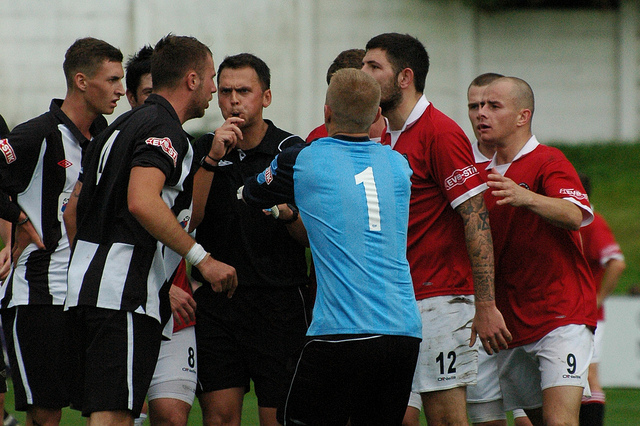
It’s All About Conflict

We spend a lot of time talking about how we’d like each and every one of our negotiating sessions to result in a “win-win” outcome. That’s all very nice. No matter what negotiation styles you use or what negotiating techniques you employ during a negotiation, you need to be disliked by the other side.

This may seem a bit harsh, but if I had to come up with a negotiation definition, I would have to call it “controlled conflict”. That means that your job is to reach an agreement with the other side, not to be liked by them.

The reason that this is such a big deal is simply because deep down inside, we all have a fundamental need to be liked. As we conduct our principled negotiation we expect that if we go to the effort of liking the other side of the table, they will like us and everyone will be able to reach that “win-win” finish line. Sadly, real life doesn’t work that way.

Instead, if you have too much of a need to be liked, there is a very good chance the that other side of the table will pick up on this and will use it against you. At different times they may make you feel as though you are their best friend as they attempt to get you to agree to what they want. At other times they may appear to be cold and distant in order to make you search for ways to bring them back close to you by giving in to their demands.

Give it up. In the world of negotiations you can either be liked by the other side or you can be a successful negotiator – you can only have one, please choose now.

Why It’s Ok To Not Be A Nice Guy (or Girl)

As counter-intuitive as this may seem, during the negotiation process you don’t have to worry about what the other side thinks about you. In fact, if you can find a way to not spend any time thinking about what they think of you, you’ll be much better off.

If you spend too much time thinking about how you are being viewed, it will take time away from what you should be focused on: reaching the best deal. When the other side appears to be hostile and makes attacks that almost seem to be personal affronts, if we are worrying about how the other side views us then we’ll be distracted from crafting an effective response.

Instead, focus on what’s being negotiated. You want the other side of the table to not like you – your goal is not to be their friend during the negotiation. Depending on what’s being negotiated, the negotiations could drag on for quite some time. Allowing the other side to not like you takes an enormous burden off of your shoulders and allows you to focus on what’s really important: reaching a deal.

What All Of This Means For You

We would all like to be liked by everyone that we come into contact with. The problem with this is that during a sales negotiation, this need to be liked can turn into a significant handicap. We need to get over it.

If you can allow yourself to not care how the other side of the table is viewing you during a negotiation, you will be in a much stronger position. Realizing that if you allow the other side to influence how you feel that they feel about you then they will be able to get you to make concessions that you wouldn’t normally have made. Instead, put aside your need to be liked during the negotiation and instead focus on reaching the best deal possible.

It’s not easy to not care how someone feels about you. However, when you are in the middle of negotiating a big deal you need to be able to do this. There will be time to mend fences and build bridges with the other side of the negotiating table – after you have successfully reached a deal with them!

- Dr. Jim Anderson
Blue Elephant Consulting –
Your Source For Real World Negotiating Skills™

Question For You: Where do you think the line should be drawn between being not nice and being a jerk?

Click here to get automatic updates when The Accidental Negotiator Blog is updated.

P.S.: Free subscriptions to The Accidental Negotiator Newsletter are now available. Learn what you need to know to do the job. Subscribe now: Click Here!

What We’ll Be Talking About Next Time

The goal of any sales negotiation is for both sides of the table to eventually reach an agreement that they both can live with. Although this sounds simple, sometimes such an agreement can appear to be unobtainable. However, never say never – it turns out that there is a simple technique that may yet snatch a victory for you from the jaws of defeat

Can Sales Negotiation Be Done Via Email and Text?

Tuesday, May 26th, 2009
Email Is A Powerful Tool, But Is It The Right Tool For Sales Negotiations?

Email Is A Powerful Tool, But Is It The Right Tool For Sales Negotiations?

I might be setting off a bit of a firestorm with this idea, but here in the 21st Century do you think that it is possible to conduct sales negotiations using more smart phones and less human contact?

The Need For Modern Solutions

The #1 attraction of using a smart phone (Blackberry, iPhone, or whatever) in the first place is that it can speed just about anything up. The immediacy of e-communications allows deals to develop quicker and to move at speeds that once were unimaginable. However, when it comes to sales negotiations, things can get a bit trickier.

What we are all just starting to deal with here are the questions that come up surrounding e-mail negotiations. Some of these questions include:

  • Is it possible to conduct sales negotiations completely via email?
  • What impact does this have on what kinds of information can be shared during the sales negotiation?
  • When is human contact called for?

The New Rules

Using email as a central part of any sales negotiation changes a number of things. The first is that anything that you put into an email will live forever and may come back to haunt you. It is a great way to send information to the other side, keep almost perfect records, and make sure that everyone involved is informed on where things stand.

At the same time there are pitfalls that everyone must be aware of. These tend to show up whenever there are conflicts or misunderstands. The problems come about because the one thing that email does not do well is communicate emotions or nuances.

So what are the “new rules” in this world of email supported sales negotiations? Here are a few of them:

  1. Slow Down: do not write and send emails on the fly. Remember, these things live forever. I prefer to write the email one day, save it, re-read it the next day and then send it. I’m always careful to leave the “To:” field blank while I’m composing an email JUST IN CASE the “send” key get pressed too early.
  2. Only You Can Prevent Forest Fires: in order to prevent those cases where misunderstandings start small but keep getting blown out of proportion, don’t use ALL CAPITAL LETTERS, multiple !!!!!, or including flip comments (“How about making a real counteroffer?”).
  3. Don’t Forget The Phone: In every sales negotiation, there will probably be a time in which it would be better if you picked up the phone and talked with the other side instead of sending them another email. Realize that this moment exists, look for it, and act when it shows up.

Lessons Learned

The take-away from all of this is that times are changing. Gone are the days that all sales negotiations could take place face to face. Negotiating via email is here to stay and we all need to get used to the new rules of the game.

The experts who have been living with this new way of doing business have one final suggestion for all of us. They recommend that prior to starting the negotiating process, all parties meet in person. This is the key to allowing everyone to understand their body language and how they react to things. In the end, this is critical so that you can understand the true intent behind the words in their emails.

Do you negotiate via email today? Has there ever been a miscommunication caused by email? What caused the problem? How was it resolved? Leave me a comment and let me know what you are thinking.

Classic Sales Negotiation Tactic: I’ve Got To Talk To My Boss…

Tuesday, February 17th, 2009
The Escalating Authority Sales Tactic Is Crude But Often Works

The Escalating Authority Sales Tactic Is Crude But Often Works

Picture this scene: it was about 20 years ago (ouch!) and I was still dating my wife when she suddenly had to replace her car. She knew exactly what she wanted: a Honda Civic with a manual transmission. There was a local Honda dealer near where she lived so one evening we went there to have a talk about buying a car.

The salesman that we talked with was the “older guy who reminds you of your uncle” variety. I had an opportunity to sit back and watch my soon-to-be-my-wife bargain with him over the price. She started low, he started high, and after a bit of back-and-forth, they were still fairly far apart. Now my bride-to-be had done her homework and had called a bank to find out how much this car was really worth (20 years ago = no real Internet). So she knew what the correct outcome of this sales negotiation needed to be.

The salesman that we were dealing with looked at the gap in offered / accepted prices and said, of course, “are you sure that you can’t do any better than this”. When my girlfriend said “No”. He then said “I’m going to have to go talk with my boss about this…” And off he went.

Returning about 10 minutes later, he had a slightly lower price, but still the gulf between what my girlfriend was willing to pay and his new lower price was great. TWO MORE TIMES HE WENT BACK TO TALK WITH HIS BOSS. I couldn’t believe this – I was watching a classic Greek play being staged before my very eyes. At any rate, my girlfriend got the price that she was asking for in the end after about 90 minutes of haggling. What was going on here?

I didn’t know the name of this sales negotiation tactic at the time, but I do now. It’s called the “Escalating Authority” tactic. This tactic uses the need to have a deal approved by a reluctant higher authority in order to gain more concessions from the other side of the table.

This tactic is used by salespeople all the time. The reason that they use it is because it often works. Here’s what a salesperson can expect to get out of using the “Escalating Authority” tactic:

  • Helps to lower the other side’s expectations.
  • Causes the other side’s arguments to come out early instead of later.
  • May cause conflict within the other side’s negotiating team.
  • Causes the other side to state their negotiating demands earlier.
  • Just physically wears the other side down.
  • May end up lowering the self-confidence of the other side.
  • Uses up the other side’s valuable time.

The party that this tactic is being used on is not without defenses. There are several counter measures that can be put in place in order to diminish or eliminate the effectiveness of this sales negotiation tactic:

  • Match the other side: bring your higher level people to the table when they say that they need to go to their higher level people.
  • Walk out.
  • Bypass the other side of the table and go directly to their senior management.
  • Manage the expectations of a quick resolution on your side of the table.
  • Communicate to your side of the table what tactic is being used against you and let them know that one of its goals is to lower their expectations for the outcome of this sales negotiation.
  • Don’t repeat yourself. Force the other side of the table to relay all that you have said to each higher level of their management.

In the end, the Escalating Authority tactic is a fairly crude negotiating tool that is used most often by amateur negotiators. It can be countered easily and effectively. Keep your eyes open and make sure that you spot it when someone starts to use it on you – the best Escalating Authority tacic defense is a good offense!

Have you ever had the Escalating Authority tactic used on you during a negotiation? How did you respond to it? In the end was it successful? Have you ever had a chance to use it during a negotiation? Leave me a comment and let me know what you are thinking.

Negotiation Battle: Tom Hanks vs. Mel Gibson

Thursday, February 5th, 2009
The SAG And The Studios Are Deadlocked In Their Negations, Now What?

The SAG And The Studios Are Deadlocked In Their Negations, Now What?

In the world of Hollywood, they have the ability to make the unreal seem oh so real. However, right now they are having a great deal of difficulty negotiating to make a contract between the big movie studios and the Screen Actors Guild (SAG) become a reality. Are we going to be looking at another actors strike?

Perhaps a bit of a background is needed here. The SAG is a 120,000 member union that represents, what else, actors. The SAG is currently negotiating with the major studios to create a new contract for its members – their old contact ran out back in June.

This type of negotiation is fairly common. However, what’s making it interesting this time around is that there appears to be a difference in opinion on how best to negotiate within the SAG. This is causing a split to occur and may be significantly reducing the SAG’s negotiating power.

Within the SAG there are two groups that are taking differing views of how the negotiations need to proceed. The first group, called Members First,  is lead by the SAG’s president Alan Rosenberg and their Executive Director Doug Allen. Doug also happens to be the SAG’s chief negotiator. The second group calls itself Unite for Strength and has won several key seats on the board and now, by aligning with other board members,  has a slight majority.

So what’s the issue here?

Currently the SAG is in deadlock in their negotiations with the big studios. The Members First team wants to have the SAG members vote to authorize a strike if the negotiating team needs to call one. The Unite for Strength team wants the board to vote against having a strike vote as well as having them replace the current negotiating team. Talk about bad blood!

If the Unite for Strength team got their way, then they would probably try to jump-start the stalled negotiations with the studios. They would go along with the pay terms for new media that other unions have negotiated with the studios as  an exchange for getting improvements in the traditional media pay areas.

Why does the Unite for Strength team not want a strike vote to be taken? They believe that a strike now would be a poor decision based on the current economic state of the country.

Tom Hanks supports the Unite for Strength team. Mel Gibson supports the Members First team.

Just to make things a bit more complicated, the studios are insisting that their current offer on the table is their final offer. It contains some provisions that no SAG members likes such as a proposal to eliminate mandatory meal times (I mean come on, an actor has got to eat…)

So what should a negotiator make of all of this back-and-forth?

First, the public SAG split is bad news for the actors because it transfers power to the studios. When the other side of the table is in disagreement, your position is stronger. However, this also means that reaching an agreement with the SAG will be more difficult – the studios need to get all of the SAG to agree to a new contract.

It looks like SAG has done a poor job of PLANNING their side of the negotiation. There is a critical question of what is more important: money from traditional (films, TV) media or money from new (DVD, Web) media. Pick your poison, but this is an issue that all of the SAG needs to get behind.

Both sides of the table are at fault for allowing the deadlock to continue for six months. One subtle point here is that the studios may be willing to live with a deadlock because there is no current threat of a strike and the longer they wait, the greater the split within the SAG grows.

If the SAG replaces their negotiating team, then there will be a great deal of negotiating ground that will need to be revisited as the two negotiating teams meet for the first time and work out their negotiating positions.

What’s to be learned from this negotiating mess? A couple of key points: negotiations need to be planned out before discussions start so that inter-team squabbling can be taken care of BEFORE the talks start. Next, replacing a negotiating team during negotiations is a radical step that should be avoided at all costs – it’s just too expensive in terms of time. There’s a lot more to learn here, but I’m pretty sure that time will reveal what mistakes were made and which side ended up with more negotiating power…

If you were a member of the SAG, which team would you want to be a part of (the Tom Hanks team or the Mel Gibson team)? Who do you think has the stronger position in the negotiations right now? What would your next steps be if you were the studios? Leave me a comment and let me know what you are thinking.

Deadline? We Don’t Need No Stinkin Deadline…

Tuesday, February 3rd, 2009
Deadlines Show Up During Negotiations, But Are They Real?

Deadlines Show Up During Negotiations, But Are They Real?

What would the world of negotiating be without deadlines? I can tell you that Hollywood movies would lose a lot of their plot if the bad guys couldn’t set impossible deadlines for our heroes to try to meet. What about real life – why do people use deadlines while negotiating?

It’s actually pretty simple, a deadline is an effective communication tool. Deadlines can be used by either side to apply pressure to the other side and force them to make a choice. If the party that’s under pressure chooses to accept the deadline, then the deal will be done. Otherwise, who knows?

You see, the trick with deadlines is that when you are presented with one you can never be quite sure that it’s real. In the game of poker this is called bluffing. The one thing that we do know about a deadline is that if we accept it, everything will be resolved. However, there will always be that unanswered question as to what would have happened if we had not met the deadline…

One solid piece of advice is given by experienced negotiators: always be skeptical of any deadline that you encounter during a negotiation. These types of fixed time limits have a tendency to come and go.

Now having said this, you also have to realize that in real life sometimes a deadline is real. If you choose to not meet it, then you are running the very real risk that this may kill the deal once and for all.

In order to help you see your way through the deadline maze, here are three questions that you need to ask yourself anytime that you encounter a deadline during a negotiation:

  1. For The Other Side: what deadlines do you know about that the other side has to live with? Do you know what will happen if they miss their deadlines?
  2. For You: what deadlines have been placed on me by either my team, my organization, or myself? Will these deadlines limit how effective I can be during this negotiation?
  3. Renegotiation: Is is possible for my team to renegotiate any of the deadlines that have been placed on us by our own people? Who says that we can or cannot?

As much as we all dread having the other side throw a deadline at us, we need to remember that deadlines are an effective tool that we have in our own bag of tricks. Studies of negotiations have been done and they have revealed that deadlines do one thing very well – they force the other side to make a decision.

All too often in a negotiation, things can be dragging on for too long. If you find yourself in this situation where the other side appears to be resisting making up their minds, then perhaps a deadline is called for.

This type of situation often shows up when the other side is faced with an especially difficult decision. They will drag their feet longer in order to avoid having to make up their mind. If you can convey to them that there is a sense of legitimacy to your deadline, then you can use this powerful tool to close the deal faster.

Have you ever been presented with a deadline during a negotiation? Were you able to determine if it was a real deadline? Did you meet the deadline or did you skip it? What happened then? Leave me a comment and let me know what you are thinking.