Posts Tagged ‘failure’

Great Negotiators Aren’t Afraid To Stumble On The Way To The Top

Friday, November 11th, 2011
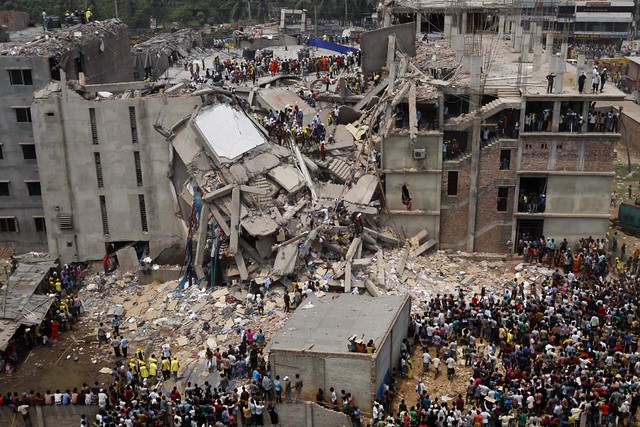
Image Credit Great negotiators always slip up before they become great

Great negotiators always slip up before they become great

A quick question for you: are you afraid to fail? Would you be willing to take on responsibility for a negotiation that might not be a success? I’m willing to bet that a lot of us would say “no” – our company’s negotiators who are perfect are rewarded while negotiators who fail are kicked to the curb. However, I’m going to tell you that you’re wrong – get ready to fail if you want to succeed.

How To Kill Your Negotiation Career

In your job right now, what would happen to you if you failed? That end-of-year review would be a tough one to sit through, right? Let’s face it, failure is not something that is rewarded in our workplace and in fact it’s something that we all actively avoid if we possibly can.

However, maybe we’re just setting ourselves up for a much bigger career disaster. Can we all admit that the world as we know it is changing? Can you remember watching old-time movies where the hero would get a job at a company and then spend his or her entire career working there? We all know that those days are long gone.

Something else is changing also: our jobs. The job that you had when you started working may already be gone. The negotiation styles and negotiating techniques that you used to use probably don’t work as well anymore. A negotiation definition that was in use just 5 years ago probably wouldn’t describe what you do today. This all means that you are going to have to change and change involves risk and along with risk comes the very real possibility that you are going to fail.

How To Become A Success By Failing

Well, that failing stuff doesn’t sound like it’s going to be any fun. But wait, has anyone else ever failed? Turns out that yes, in fact most successful people can look at their past and point to failures that helped them to get to where they are now.

The poster child for this kind of “good failure” would be Howard Schultz – the guy who founded the Starbucks chain of coffee shops. We all know and love the Starbucks store today, but when Howard first started it he really blew it. There were no chairs, he played lots of opera music, and his menu was in Italian. Clearly he realized that he had failed, quickly adjusted, and went on to become a big success.

You can do the same. You need to learn to make lots of small bets during your negotiations. Some of these bets will pay off, and some won’t. It’s through what you learn from the failures that you’ll be able to make tiny changes to your approach to negotiating and try, try again.

If we keep doing things the same way that we’ve always been doing them, then we will eventually stagnate and then we’ll go into decline. However, if you have the courage to start to fail and to learn from those failures, then the future contains limitless possibilities for both you and your career.

What All Of This Means For You

Negotiators who are afraid to fail will never become a true success. Oh sure, they may do ok for a few years, but when things get really rough, they’ll wash out.

If you are willing to adjust how you view failure, your negotiating career can take off. However, if you can start to look at failures as being simply being learning experiences that are not be feared, but they are to be used to become a better negotiators then you’ll be able to grow and become better at what you do.

No, you can’t be an idiot about this and do silly things that cause your negotiations to fail – you still need to practice principled negotiation, but if you try your hardest and your negotiation still fails than you will have learned what part of your negotiation process doesn’t work. The big deal is that it takes courage for you to be able to do this.

Negotiators who are a success have to had failures in their past. It’s from the forge of failure that the steel of success is formed. Learn how to make small bets so that you can learn what works and what doesn’t. Learn from both your failures and your negotiated deals. Do this well and you’ll become a successful negotiator.

- Dr. Jim Anderson
Blue Elephant Consulting –
Your Source For Real World Negotiating Skills™

Question For You: What’s the best way to get your management to become comfortable with failures as a sign of success?

Click here to get automatic updates when The Accidental Negotiator Blog is updated.

P.S.: Free subscriptions to The Accidental Negotiator Newsletter are now available. Learn what you need to know to do the job. Subscribe now: Click Here!

What We’ll Be Talking About Next Time

A negotiation is very much like a dance, you make a move and then your move forces the other side to make a move. Once they’ve done that, then their actions force you to take some corresponding action and so on. There is a logic to all of this and where things get interesting is when we start to try to figure out if the role that logic plays is working for us or against us…

Follow The Bouncing Price: What Sales Negotiators Need To Know

Friday, March 19th, 2010
Image Credit
During A Sales Negotiation, A Price Can Go Up Or Down Many Times

During A Sales Negotiation, A Price Can Go Up Or Down Many Times

A Price Is Not A Fixed Thing

Inexperienced sales negotiators often enter into a negotiation thinking that the price of something that they are trying to buy or sell is fixed – it’s set in concrete and cannot be changed. They think that their goal is to “discover” what this price is through negotiating. Those of us who have been doing this sales negotiating thing for awhile know differently. It turns out that the price of just about everything is constantly in flux – and we need to understand what can make it go up as well as go down…

It’s All About Expectations

Although I love talking as much as the next person, the goal of any sales negotiation is to eventually reach a deal that is acceptable to both sides of the table. In order to reach that goal, the other side of the table needs to feel that they’ve reached the best deal that they’re going to get – that it’s pointless to continue to negotiate.

This brings up the issue of expectations. Whether we’re willing to admit it or not, we’ve always got a price floating around in our head when we are negotiating. This is the price that we think that we can buy or sell something for. During the course of the negotiation, depending on what is going on, this price is going to go up or down.

Since the very same thing is going on in the heads that are on the other side of the table, perhaps it would be a good idea to take the time to understand just what makes this imaginary price go up or down.

There has been a fair amount of research done on how people manage their expectations. Specifically, the researchers have taken a close look at what makes our expectations go up or down. Here’s what they’ve found:

  • It’s All About Success (and Failure): It turns out that our expectation of what we think that we can sell something for or what we think that we can buy something for goes up or down after we experience a success or a failure during a sales negotiation. In other words, if the other side makes a concession to us, we feel that we will be able to sell at a higher price or buy at a lower price. Likewise, if we have to make a concession to the other side, then we start to feel as though we’ll have to sell at a lower price or will end up paying more for what we are trying to buy.
  • Let Them Be Successful Slowly: This understanding of mental prices leads us to the understanding that if you slowly make concessions to the other side, then their expectations for being more successful during the negotiations will only go up a little bit.
  • We Just Don’t Get Failures: Much like small successes, small failures have even less impact on the other side of the table’s mental price expectations. This is why when you are trying to get them to lower their expectations for what they’ll walk away with, you may need to get them to make the same compromise over and over again so that they finally get the point.

Where You Aim Is Where You’ll End Up

With all of this new understanding about what makes us expect more or less from a given sales negotiation, you might be wondering if there is any way that you can protect yourself from all of this up and down stuff. It turns out that there is.

The same researchers who studied how success and failure affected our expectations also too a look at what it takes in order to be more successful. It turns out that the people who set higher expectations for themselves were almost always more successful during a negotiation.

When you set high expectations for what you want to get out of a negotiation, then all of a sudden that sets the mental price that you are shooting for. Everything else gets measured against this. You can’t help but to walk away at the end of the negotiation in a better position that you would if you had set your expectations lower.

What All Of This Means For You

Like it or not, every time that we start a sales negotiation we have a price in our heads that we want to buy or sell at. The other side of the table is exactly the same — they have their own mental price. The key to a successful negotiation is making sure that you mange the other side of the table’s expectations during the negotiations.

Successes and failures during a negotiation are what cause our mental prices to go up and down. This means that you need to manage how concessions are given to the other side of the table – give too much and their expectations will shoot up.

In order to make sure that your rising and falling expectations don’t doom your negotiations, make sure that you set high expectations for yourself before starting any negotiation. If you can do this, then you will always be successful.

Question For You: Do you think that making a single big concession or multiple smaller concessions would have the largest impact on the other side’s expectations?

Click here to get automatic updates when The Accidental Negotiator Blog is updated.

What We’ll Be Talking About Next Time

As I work with sales negotiators and teams of negotiators I am constantly surprised by just how hard it is for them to say one simple word: “No” . Normally, this is no big deal – I mean who wouldn’t want to hang out with somebody who is always agreeable. However, this inability to say “no” can spell disaster when you are in a negotiation…